Home / Guides / Construction Debris Disposal in Montgomery County
A straight guide for contractors and remodelers: what a roll-off takes, what it will not, and how to keep debris from stalling the job.
On a jobsite, debris is not a side issue. It is safety, it is schedule, and it is margin. Handled wrong, a pile of construction waste eats a day and a chunk of the budget. Handled right, the container is emptied and back before the crew needs it again. Here is how construction debris disposal works in Montgomery County, and how to keep it moving.
Most jobsite debris is a clean fit for a roll-off dumpster. That includes:
For a full breakdown of how this fits into a jobsite rental, see our commercial and construction dumpsters page.
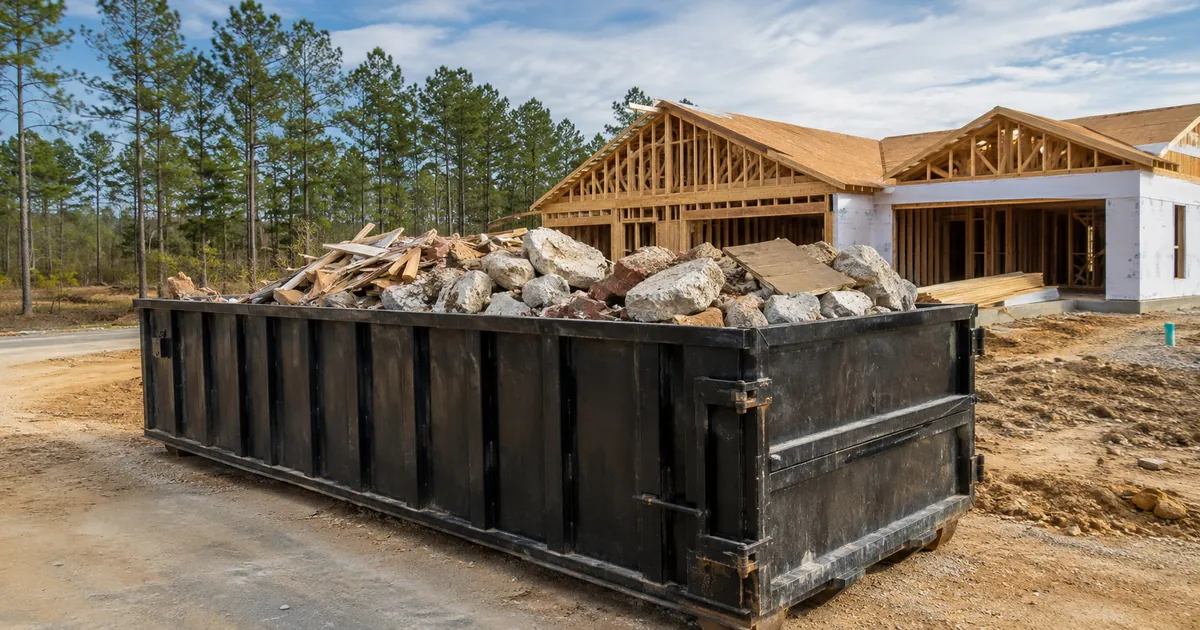
Concrete, brick, block, asphalt, and dirt are what separate a smooth haul from a surprise bill. They are dense, which means a container full of them can blow past its weight allowance while it still looks half empty. Because of that, heavy inert material is often kept in a separate, smaller container, sometimes a dedicated "clean concrete" load that can be recycled rather than landfilled. If your job produces both, tell us up front so the right containers and the right weight allowances are set from the start.
Contractor tip: never mix a slab demo into the same box as your framing and drywall. Separate the heavy inert material and you avoid overage fees and often get a better rate on the clean concrete load.
Some materials are not allowed in a standard construction dumpster because they are hazardous or regulated. Keep these out:
If you are not sure whether something is allowed, ask before it goes in the box. Contaminating a load can turn a routine haul into a rejected one.
| Project | Typical size | Why |
|---|---|---|
| Single-room remodel or bath | 10 to 15 yard | Contained, often heavy debris |
| Whole-home renovation | 20 to 30 yard | Steady, bulky mixed waste |
| New construction or large addition | 30 to 40 yard | High, continuous volume |
| Concrete or slab removal | 10 yard (dedicated) | Weight, not volume, is the limit |
On a longer build, a swap-out schedule keeps you from ever waiting on an empty container. If you tell us the phase and the pace of the job, we can plan the drops and pickups around it.
A tidy jobsite is not just about appearances. Fewer trip hazards, easier inspections, and a crew that is not stepping around a debris pile all add up. The simplest way to protect your schedule is to have the next haul lined up before the current container is full, so the box is empty and waiting when the crew needs it.
For jobsite work, see commercial and construction containers and the sizes and weight guide. Street placement on a jobsite is covered in the permit guide.
Tell us the project, the debris type, and the timeline. We will set the right containers and a swap schedule that keeps the site clear.
Call (346) 485-7076